Material innovation

Developments in product and material design to deliver more value with less waste

Our expertise on the cutting-edge of circularity advances alternative materials and designs that reduce waste.

Material recoverability

Packaging design

Plastics alternatives

Our Work

Button Text
No items found.

Reports

Reporting on half a decade of composting industry impact

Composting Consortium impact report highlights half a decade of impact across cross-sector research, field testing and industry collaboration on compostable packaging recovery and composting infrastructure in the U.S.

Learn More
Learn More
Advancing prescription pill bottle recovery in the U.S.

The Closed Loop Center for the Circular Economy’s latest report maps realistic pathways to recover more prescription pill bottles—starting with lower-risk opportunities for bulk packer bottles and building toward longer-term solutions for consumer-facing prescription pill bottles.

Learn More
Learn More
Designing an EPR framework to include compostable packaging recovery

This report supports Producer Responsibility Organizations (PROs), regulatory agencies and legislative staff in developing thoughtful EPR programs and EPR investment strategies.

Learn More
Learn More
Keeping toys in play

This report explores the opportunities and challenges for repair, reuse & resale for toys in the U.S.

Learn More
Learn More
Future-proofing recycling operations

The guide shares best practices for recycling facilities to optimize operations as Extended Producer Responsibility laws accelerate.

Learn More
Learn More
Building a resilient circular economy: Closed Loop Partners Impact Report 2024

In this report, we spotlight several important regions across the U.S. where our work to build density and scale circular solutions has pushed past the linear economy, accelerating a circular economy powered by local communities and supply chains, and positioned for global reach and connection.

Learn More
Learn More
Measuring the impact of U.S. policies on single-use bag waste reduction

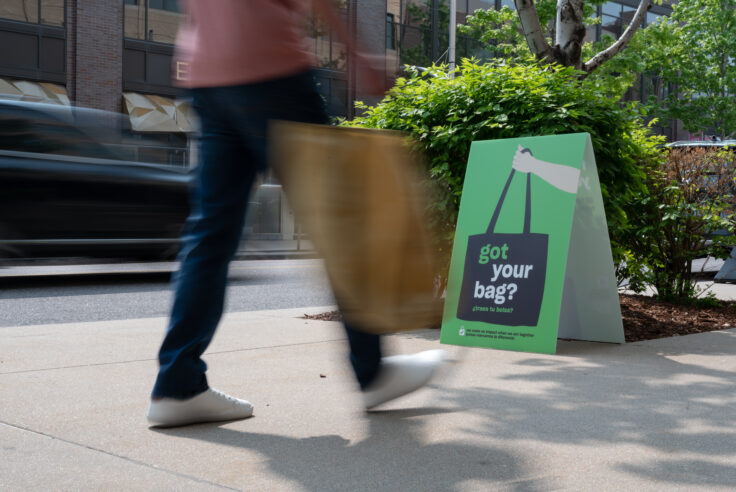
More than 330 communities and 12 states across the U.S. have enacted legislation to reduce the environmental harms of single-use plastic bags—from litter and marine pollution to material recovery challenges. But what types of policies actually work, and under what conditions?

Learn More
Learn More
Identifying food-grade polypropylene at recycling facilities using AI

Demand for recycled food-grade PP is growing, driven by policy shifts­­ and brand commitments to incorporate more recycled materials in their packaging. But a significant lack of data on the available volumes of recycled food-grade PP in the recycling system has made it difficult to amass sufficient quantities of food-grade PP to meet growing market demand.

Learn More
Learn More
Getting ready for reuse in retail

Every day, 225,000 tons of single-use packaging are used in the U.S. Research and in-market tests over the last decade have shown the importance of reuse in recovering material value and reducing single-use waste. Retail stores––as central hubs of consumer interaction––are uniquely positioned to lead this transition to reuse.
Learn More
Learn More
Scaling reuse systems in Petaluma, California

Insights and impact from the nation’s first citywide program to offer reusable to-go cups to every customer with no deposits or fees.

Learn More
Learn More
Accelerating Small Format Packaging Recovery

This report examines the challenges and opportunities in recovering small-format rigid plastics, providing insights into collection systems, processing technologies..

Learn More
Learn More
Driving a culture shift to reduce plastic bag waste

Cultivating new habits that reduce waste is hard, but the Consortium to Reinvent the Retail Bag is laying the foundation to make this possible.

Learn More
Learn More
Creating a municipal blueprint for composting

Municipalities––counties, cities and more––play a critical role in developing robust composting infrastructure and collection programs that divert organics from landfill

Learn More
Learn More
Unlocking the economic and environmental potential for food waste composting in the U.S.

This report by the Composting Consortium dives deep into the current state of food waste composting infrastructure in the U.S., explores investment opportunities and offers policy recommendations to accelerate the scaling of this critical infrastructure. Our focus centers on commercial-scale composting facilities with the capacity to accept the most complex organics streams, including post-consumer food scraps alongside food-contact compostable packaging.
Learn More
Learn More
Advancing a circular built environment in the U.S.

The built environment—those man-made structures where we live, work and play—casts a profound impact on our quality of life and well-being.

Learn More
Learn More
Scaling composting infrastructure to keep food waste out of landfills

The Compost Policy Toolkit offers valuable insights for navigating the complexities of compostable packaging policy and food waste diversion.

Learn More
Learn More
Expanding compost markets and building healthier soils through smart policies

This policy brief explains the role that policy can play to support robust compost end markets, enrich soil quality and promote sustainable practices.

Learn More
Learn More
Analyzing disintegration data for compostable packaging

Does compostable packaging successfully break down in commercial compost systems?

Learn More
Learn More
Evaluating anaerobic digestion's role in compostable packaging recovery

A study to assess the extent to which compostable packaging is currently processed within existing large-scale AD infrastructure in the U.S. The analysis, done in partnership with BioCycle and Target Renewables, LLC., was focused on those facilities that process hundreds to thousands of tons of organic waste per day.

Learn More
Learn More
Assessing contamination levels at composting facilities

The study examines five commonly held assumptions about contamination and compostable packaging, and breaks down in-field realities in a data-backed and easy-to-follow format.

Learn More
Learn More
Optimizing EPR through effective Needs Assessments

This policy brief explains the importance of conducting needs assessments for EPR that account for composting infrastructure and compostable packaging. 

Learn More
Learn More
Exploring composting as a path to zero waste

In the transition to a circular economy––one where waste is eliminated, materials are circulated, and nature is regenerated––we need to consider the key role of one of the earliest forms of material cycling: composting.

Learn More
Learn More
Unpacking customer perspectives on reusable packaging

In this report, we present our learnings on reusable packaging from the perspective of U.S.-based customers, providing a glimpse into prevailing attitudes and the factors shaping this rapidly evolving landscape.

Learn More
Learn More
Closing the loop on paper cups

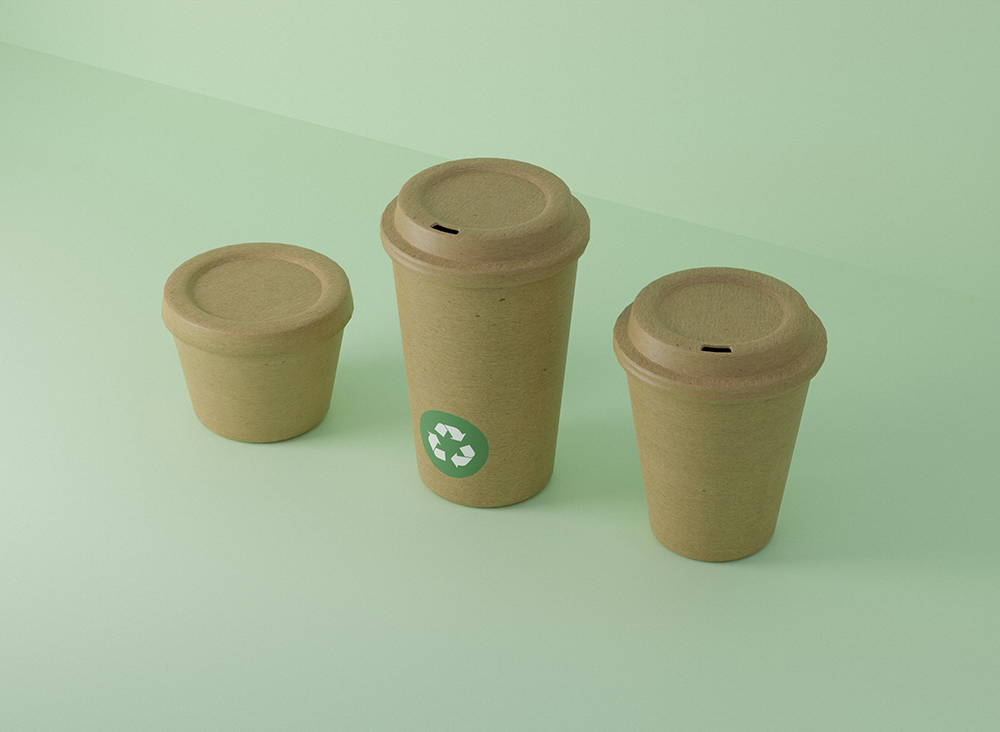
In this report, we focus on paper cup recovery, by assessing critical nodes of the paper cup recovery value chain—paper mills, material recovery facilities, brands, consumers and local communities—to demonstrate how, together, these stakeholders can sustain a market for paper cup recycling. Each has a unique and critical role to play in enabling cup recycling.

Learn More
Learn More
Eliminating single-use bag waste: Beyond the Bag Impact Report 2023

In our 2023 impact report, the Consortium to Reinvent the Retail Bag shares key learnings—from year one to three—walking through our iterative process of identifying possible solutions, testing them in-market and learning from these tests with the ultimate goal of broader implementation to reach scale. These lessons learned and impact highlights lay the foundation for ongoing work to reinvent in the retail bag in the coming years.

Learn More
Learn More
Creating design and labeling standards for compostable packaging

This policy brief explains the importance of clear and consistent labeling designs standards for compostable packaging to reduce packaging waste, outlining 5 recommended actions for policymakers.

Learn More
Learn More
Unpacking design and labeling for compostable packaging

Our report unpacks effective design and labeling techniques to improve the proper diversion of food-contact compostable packaging to the appropriate material stream.

Learn More
Learn More
Sharing successful retail strategies to reduce bag waste

The Playbook highlights 25 tactical and proven bag waste reduction strategies sourced from 16 retailers in and outside the Consortium to Reinvent the Retail Bag that can drive near-term, positive environmental impact and cost savings.

Learn More
Learn More
Sharing lessons learned from multi-retailer reusable bag pilots

In this report, Beyond the Plastic Bag, the Consortium to Reinvent the Retail Bag shares key insights and analysis gathered from collaborative reusable bag pilots conducted across select CVS Health, Target and Walmart stores throughout Northern California in 2021.

Learn More
Learn More
Assessing molecular recycling technologies in the U.S. and Canada

This report assesses the current state of molecular recycling technologies across the United States and Canada, examining technological capabilities, market readiness, and regulatory frameworks.

Learn More
Learn More
Mapping the molecular plastics recycling market

The goal of this report is to reflect the current landscape of technology providers focused on converting waste plastics into a variety of safe and high-quality materials, as well as the scale of opportunity for these providers to meet demand.

Learn More
Learn More
Bringing reusable packaging systems to life

In the report, the investment firm and innovation center outlines key lessons learned and shares a blueprint and open-source resource to encourage collaboration and the growth of reuse models.

Learn More
Learn More
Navigating plastic alternatives in a circular economy

As part of our Advancing Circular Systems for Plastics & Packaging Initiative, Closed Loop Partners published Navigating Plastic Alternatives in a Circular Economy to demystify the rapidly growing and evolving landscape of plastic alternatives, with a focus on bio-based plastics, biopolymers and compostable products and packaging.

Learn More
Learn More
Assessing alternative designs for the single-use retail bag

The seminal report on the single-use retail bag assessing the current context of the bag spanning consumer behavior, alternative materials, legislation and new innovative solutions on the horizon.

Learn More
Learn More
Preparing businesses for the shift to reuse

Learn More
Learn More
Providing Guidance to Include Compostable Packaging in Extended Producer Responsibility 2

Learn More
Learn More

Case Studies

Ready to solve your most pressing material challenges?
Let’s connect.

Your name
Email Address
Your message
Thank you! Your submission has been received!
Oops! Something went wrong while submitting the form.